Tuesday, March 31, 2015


3 Cthulhu Mythos Stories (Robert E. Howard)


''A word as to this rare work. Its extreme ambiguity in spots, coupled with its incredible subject matter, has caused it long to be regarded as the ravings of a maniac and the author was damned with the brand of insanity. But the fact remains that much of his assertions are unanswerable, and that he spent the full forty-five years of his life prying into strange places and discovering secret and abysmal things.''

https://archive.org/details/TheCthulhuMythosStories

Sunday, March 29, 2015


 The Lizard Men of Los Angeles (Lewis Shiner, 
 1999)


"Have you ever," Rosenberg asked, "heard the name Aleister Crowley?"
They sat the parlor of Rosenberg's house in the community of Silver Lake,
located to the north and west of Los Angeles proper. Rosenberg was
fortifying himself with brandy while Cairo drank strong tea. Mrs.
Lockhart, who had changed into a low-cut black evening dress, had
declined refreshment.
"The Great Beast?" Cairo asked, startled. "He's involved in this?"
 
 https://archive.org/details/wolvesofgodandot00blacrich


Friday, March 27, 2015


The Wolves of God, and other fey stories (Algernon Blackwood/Wilfred Wilson ,1910)


https://archive.org/details/wolvesofgodandot00blacrich


Thursday, March 26, 2015


At the Mountains of Madness (H.P. Lovecraft, 1936)


''I am forced into speech because men of science have refused to follow my
advice without knowing why. It is altogether against my will that I tell my
reasons for opposing this contemplated invasion of the antarctic - with its
vast fossil hunt and its wholesale boring and melting of the ancient ice caps. 
And I am the more reluctant because my warning may be in vain.''

https://archive.org/details/AtTheMountainsOfMadness

Wednesday, March 25, 2015


The Hollow Earth (Rudy Rucker, 1990)


''In 1836, Mason Algiers Reynolds leaves his family’s Virginia farm with his father’s slave, a dog named Arf, and a mule named Dammit. Branded a murderer, he finds sanctuary with his hero, frustrated genius Edgar Allan Poe, and together they embark on an extraordinary expedition to the South Pole, and the entrance to the Hollow Earth. It is there, at the center of the world, where strange physics, strange people, and stranger creatures abound, that their bizarre adventures truly begin.''


https://archive.org/details/TheHollowEarth

Sunday, March 22, 2015


The Space Merchants (Pohl/Kornbluth,1953)


''In a vastly depleted world, businesses have taken the place of governments and now hold all political power. States exist merely to ensure the survival of huge trans-national corporations. Ad agencies have become hugely aggressive and totalitarian. Through advertising, the public is constantly deluded into thinking that the quality of life is improved by all the products placed on the market. Some of the products contain addictive substances designed to make consumers dependent on them.''
Sounds familiar?

pt3-
https://archive.org/stream/galaxymagazine-1952-08/Galaxy_1952_08#page/n105/mode/2up

Friday, March 20, 2015


''Presumably all obsessions are extreme metaphors waiting to be born.''


''I would say that I quite consciously rely on my obsessions in all my work, that I deliberately setup an obsessional frame of mind. In a paradoxical way, this leaves one free of the subject of the obsession. It’s like picking up an ashtray and staring so hard at it that one becomes obsessed by its contours, angles, texture, et cetera, and forgets that it is an ashtray—a glass dish for stubbing out cigarettes.'' 

J. G. Ballard interview (Paris Review 1984)

http://www.theparisreview.org/interviews/2929/the-art-of-fiction-no-85-j-g-ballard

''Cut word lines/Cut music lines/Smash the control images/Smash the control machine''


William S. Burroughs interview  (The Art of Fiction No. 36, 1965)

http://www.theparisreview.org/interviews/4424/the-art-of-fiction-no-36-william-s-burroughs

Wednesday, March 11, 2015


The Third Mind (Burroughs/Gysin, 1978)


''Works thank you for your collaboration, but they can also create themselves on their own; thus: 
Come to free the words 
To free the words come 
Free the words to come 
The words come to free 
Words come to free thee!
The possible permutations are 5x4x3x2x1= 120 lines. 
Therefore a 120-line poem without an author.''

https://ia700600.us.archive.org/14/items/W.s.Burroughs-PdfCollection/WilliamSBurroughsBrionGysin-3rdMind.pdf


Monday, March 9, 2015


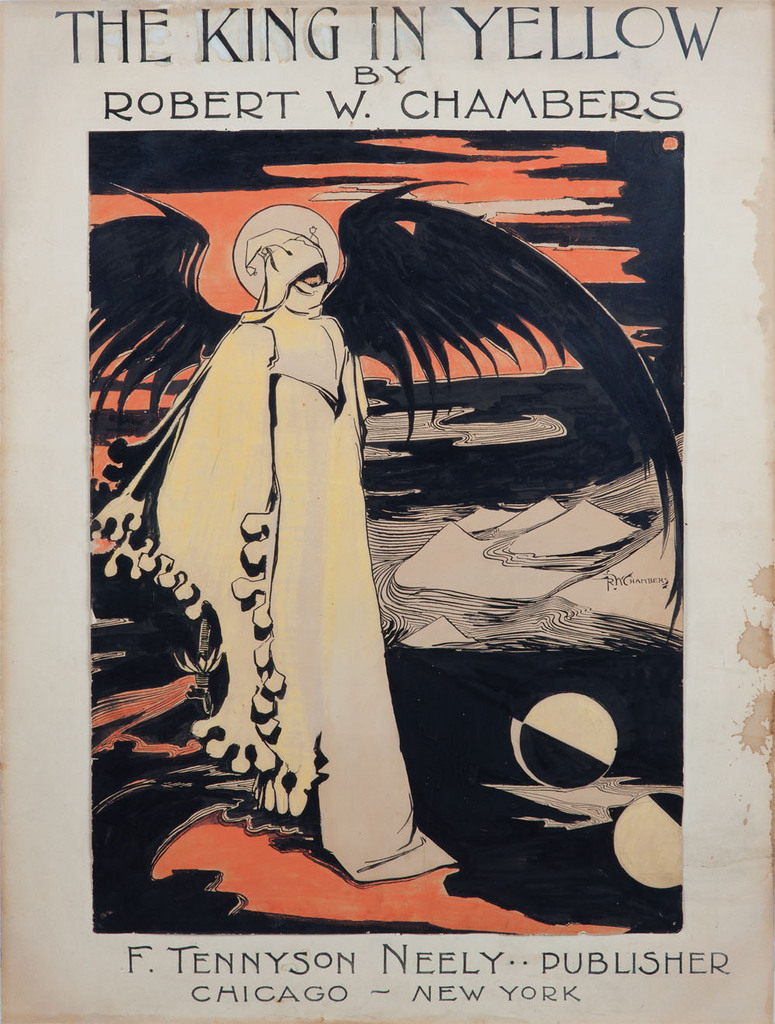
The King in Yellow 
(Robert W. Chambers, 1895)


"Along the shore the cloud waves break, 
The twin suns sink behind the lake. 
The shadows lengthen 
In Carcosa. 

Strange is the night where black stars rise, 
And strange moons circle through 
But stranger still is 
Lost Carcosa, 

Songs that the Hyades shall sing, 
Where flap the tatters of the King, 
Must die unheard in 
Dim Carcosa. 

Song of my soul, my voice is dead, 
Die thou, unsung, as tears unshed 
Shall dry and die in 
Lost Carcosa. ''

Cassilda's Song in The King in Yellow. 
(Act 1, Scene 2) 

https://archive.org/details/kinginyellow00chamrich

Friday, March 6, 2015


The House on the Borderland 
(William Hope Hodgson  , 1907)


''I read, and, in reading, lifted the Curtains of the Impossible that blind the mind, and looked out into the unknown. Amid stiff, abrupt sentences I wandered; and, presently, I had no fault to charge against their abrupt tellings; for, better far than my own ambitious phrasing, is this mutilated story capable of bringing home all that the old Recluse, of the vanished house, had striven to tell.''

https://ia600504.us.archive.org/16/items/thehouseonthebor10002gut/10002-h/10002-h.htm


Thursday, March 5, 2015


The Yage Letters (William S. Burroughs,1963)


“Yage is space time travel. The room seems to shake and vibrate with motion. The blood and substance of many races, Negro, Polynesian, Mountain Mongol, Desert Nomad, Polyglot Near East, Indian – new races as yet unconceived and unborn, combinations not yet realized passes through your body. Migrations, incredible journeys through deserts and jungles and mountains (stasis and death in closed mountain valleys where plants sprout out of your cock and vast crustaceans hatch inside and break the shell of the body), across the Pacific in an outrigger canoe to Easter Island. The Composite City where all human potentials are spread out in a vast silent market.”

https://archive.org/stream/W.s.Burroughs-PdfCollection/WilliamBurroughsAllenGinsbergYageLetters#page/n0/mode/2up

Tuesday, March 3, 2015


Dames Don't Care (Peter Cheyney, 1937)


''Some dame has just blown in an' she is certainly an 
eyeful. She is wearin' a sorta juniper an' a pair of blue 
hikin' shorts. She has gotta pair of sand shoes on, an' 
a jag that woulda lasted any ordinary guy for about 
three years. But in some funny way she has got class...
if you know what I mean.
She goes over to a table an' flops down. Behind the 
counter the girls are busy. They have gotta plate of 
hot dogs an' a large cup of coffee all ready, an' I pick 
it up an' take it over an' put it on the table in front of 
this dame. 
She takes a look at me. 
"An' who might you be?" she says. 
"Me . . . I'm a guy who believes in fairies," I say.''

https://archive.org/details/damesdontcare00cheyiala

Monday, March 2, 2015


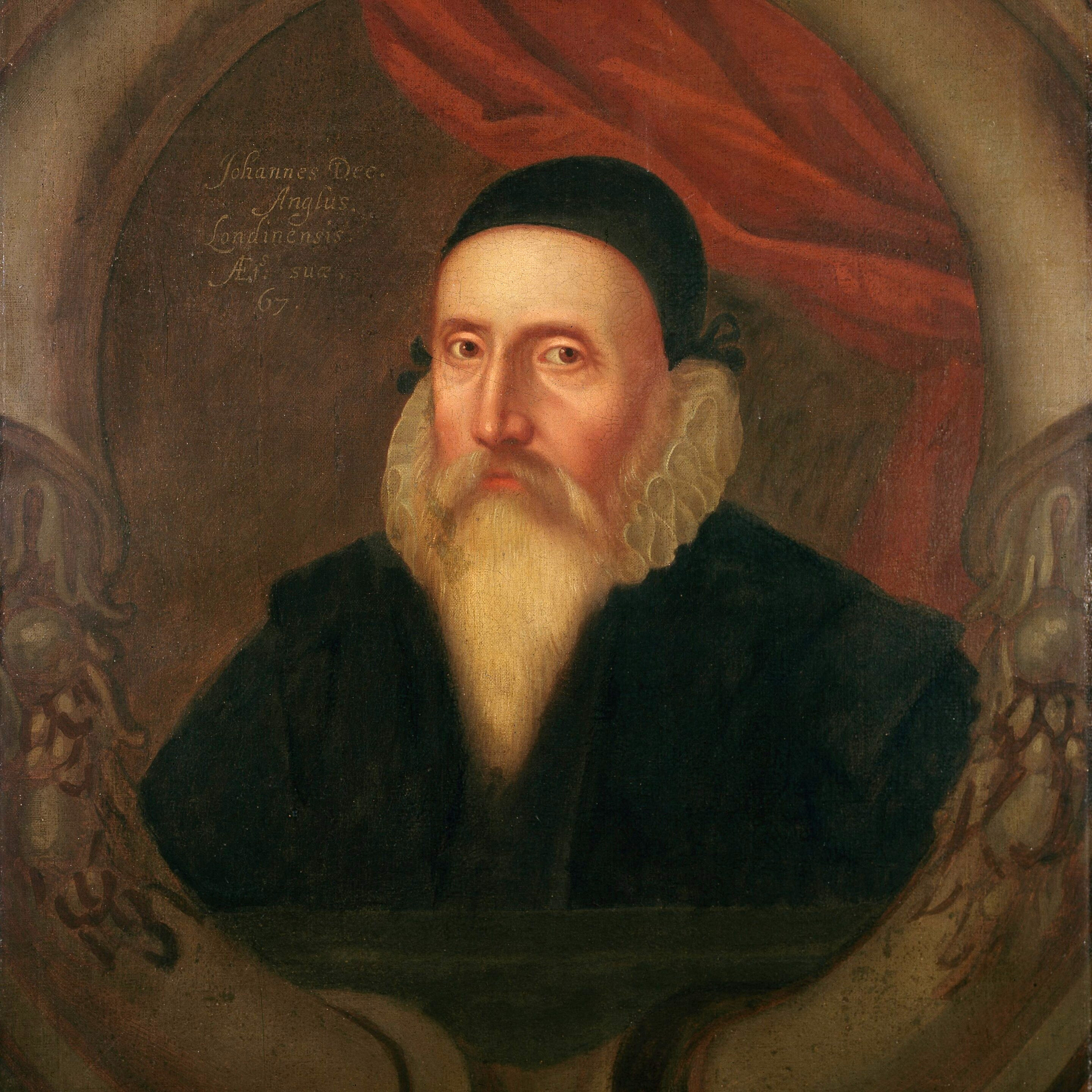
''A true & faithful relation of what passed for many yeers between Dr. John Dee and some Spirits ...'' 
(John Dee, 1659)


''...tending (had it succeeded) to a general alteration of most states and kingdomes in the world : his private conferences with Rodolphe Emperor of Germany, Stephen K. of Poland, and divers other princes about it : the particulars of his cause, as it was agitated in the Emperors court, by the Pope's intervention : his banishment and restoration in part : as also the letters of sundry great men and princes (some whereof were present at some of these conferences and apparitions of spirits) to the said D. Dee : out of the original copy, written with Dr. Dees own hand, kept in the library of Sir Tho. Cotton ... : with a preface confirming the reality (as to the point of spirits) of this relation, and shewing the several good uses that a sober Christian may make of all...''

https://archive.org/details/truefaithfulrela00deej

Sunday, March 1, 2015


Jerusalem (William Blake, 1820)


                        ''To open the Eternal Worlds, to open the immortal Eyes
                               Of Man inwards into the Worlds of Thought: into Eternity
                            Ever expanding in the Bosom of God, the Human Imagination.''


https://archive.org/details/propheticbooksw00presgoog

https://archive.org/details/jerusalememanati00blak

Saturday, February 28, 2015


The Ware Tetralogy 
(Rudy Rucker, 1982-2000)


“For me, the best thing about Cyberpunk is that it taught me how to enjoy shopping malls, which used to terrify me. Now I just imagine the whole thing is two miles below the moon’s surface, and that half the people’s right-brains have been eaten by roboticized steel rats. And suddenly it’s interesting again.” 
Rudy Rucker


Rucker, a mathematician, wrote the Ware novels starting in 1981 at the ouset of the Cyberpunk movement and finished at the dawn of the third millennium.
It is heady and scary stuff, Rucker is keen on going where most SF writers are afraid to go, social and literary taboos are shattered at neck breaking speed and we are left breathless at the virtuosity of the prose. Just consider Rucker's synopsis of the four novels:
''Software, where rebel robots bring immortality to their human creator by eating his brain. Wetware, the robots decide to start building people—and people get strung out on an insane new drug called Merge. Freeware, the robots have evolved into soft plastic slugs called Moldies­—and some human “Cheeseballs” want to have sex with them. The action redoubles when aliens begin arriving in the form of cosmic rays. Realware, the humans and robots find a wormhole with god inside, learn the art of direct matter control, get wacked out as usual—and find true love.''
https://archive.org/details/ware_tetralogy

Friday, February 27, 2015


Hieroglyphics, a note upon Ecstasy in Literature (Arthur Machen, 1902)


'' I shall be obliged to keep on reiterating the difference between fine literature and literature, or in other words between art and observation expressed with artifice. I am afraid, that in your heart of hearts, you still believe that the Odyssey is fine literature, and that Pride and Prejudice is fine literature, though the Odyssey is better than Pride and Prejudice. It is that better that I want to get out of your head, that monstrous fallacy of comparing Westminster Abbey with the charming old houses in Queen Square. You would see the absurdity of imagining that there can be any degree of comparison between two things entirely different, if I substituted for Pride and Prejudice some ordinary circulating-library novel of our own times. At least I hope you would see, though, as I told you a few weeks ago, I doubt very much whether many people realise the distinction between the Odyssey and a political pamphlet. The general opinion, I expect, is that both belong to the same class, though the Greek poem is much more important than the pamphlet. I think we succeeded in demonstrating the falsity of this idea, in showing clearly and decisively that fine literature means the expression of the eternal human ecstasy in the medium of words, and that it means nothing else whatsoever.''

http://www.gutenberg.org/files/40241/40241-h/40241-h.htm

Thursday, February 26, 2015


Thesaurus Incantatus 
(Arthur Machen, 1888)


''The Enchanted Treasure or, the spagyric quest of Beroaldus Cosmopolita, in which is sophically and mystagorically declared the first matter of the stone : with a list of choice books on alchemy, magic, talismans ...''

A bibliography of Alchemical texts to which was appended a short story by Machen about the subject. 

https://archive.org/details/thesaurusincanta00mach

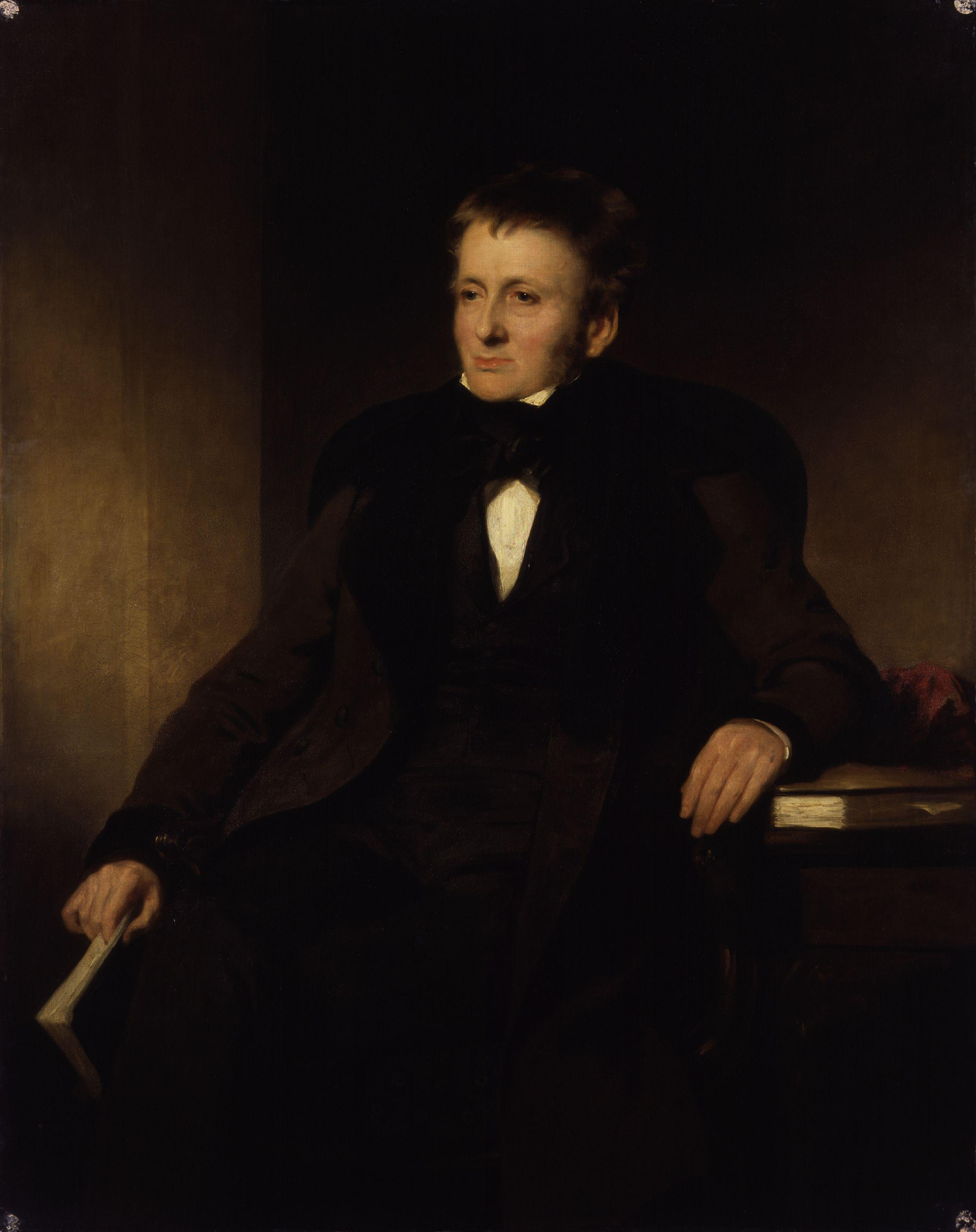
Confessions of an English Opium-Eater 
(Thomas De Quincy, 1822)


At age 37 Thomas De Quincy (1785-1859) published this account of his youthful addiction to opium, his first book. It became a run away best seller overnight and was denounced in the Parliament.Since then it has become the paradigmatic drug text, referenced by writers as diverse as Charles Baudelaire, William Burroughs, Hunter Thompson and David Bowie. 

https://archive.org/details/confessionsofane02040gut